

Business continuity is no longer a theoretical discussion reserved for annual planning meetings. In Arizona, monsoon storms knock out power. Hardware fails in the middle of a trial prep. A ransomware email slips past a busy employee. When systems go down, revenue, reputation, and client trust go with them.
For business owners, law firms, healthcare practices, and financial organizations across Mesa and the Phoenix Metro Valley, the question is not whether disruption will happen. The question is whether your infrastructure is built to absorb it.
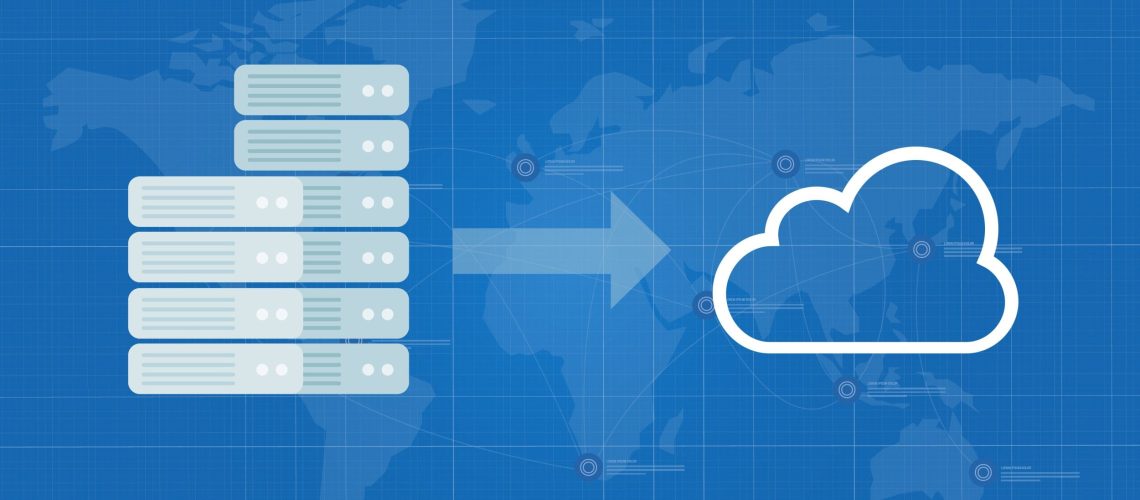
Cloud migration has become one of the most practical and measurable ways to strengthen uptime, disaster recovery, and operational resilience. When designed correctly, it reduces downtime, accelerates data recovery, and creates continuity that traditional on-premise environments struggle to match.
Downtime Is More Expensive Than Most Leaders Realize
Downtime rarely announces itself politely. It appears as frozen servers during payroll processing or inaccessible client files minutes before a court appearance.
The Uptime Institute consistently reports that the majority of organizations have experienced outages in the past three years, and a significant portion of those incidents cost more than $100,000. For regulated industries like healthcare and finance, the financial and compliance consequences can climb much higher.
Cloud migration addresses this risk directly. Organizations leveraging cloud solutions experience up to a 60% reduction in system outages. That improvement stems from distributed infrastructure, automated failover, and geographically redundant data centers operated by providers such as Microsoft Azure.
For a Mesa-based accounting firm, that difference could mean uninterrupted access to tax software during peak filing season. For a multi-location healthcare practice, it could mean patient records remain available even if one office loses power.
Reduced outages are not just technical wins. They protect revenue continuity and client confidence.
Cloud Migration Strengthens Disaster Recovery by Design
Traditional disaster recovery often relies on secondary hardware sitting in the same building or at a nearby facility. If a fire, flood, or regional outage strikes, both primary and backup systems can be affected.
Cloud services shift that model entirely. Data is replicated across multiple geographic regions. Automated backups occur continuously. Recovery environments can be spun up quickly without waiting for replacement servers to be ordered and configured.
According to industry research, 64% of businesses reported improved disaster recovery and business continuity after migrating to the cloud. That figure reflects a structural advantage. Cloud backup and recovery processes are automated and monitored around the clock.
Consider a Mesa law firm managing thousands of confidential case files. If ransomware encrypts local systems, a well-architected cloud backup strategy enables data recovery in hours rather than days. Operations continue. Court deadlines are met. Clients remain unaware that a serious threat occurred behind the scenes.
The ability to restore systems rapidly can determine whether a company survives a crisis. Cloud migration in Arizona provides that safety net.
Geographic Resilience Matters in Arizona
Arizona businesses face unique risks. Extreme heat strains power grids. Monsoon storms cause localized flooding. Construction growth increases the likelihood of fiber cuts and utility disruptions.
Relying solely on physical servers inside a single building in Mesa introduces concentration risk. Cloud storage in Arizona and across national Azure regions distributes that risk.
With a hybrid cloud model, critical workloads can run in Azure while specific applications remain on-premises for compliance or performance reasons. If one environment is disrupted, the other can maintain essential operations.
A manufacturing company in the Phoenix Metro Valley, for example, might run production management systems in the cloud while keeping specialized equipment controls on-site. If internet service is temporarily disrupted, operations can continue locally. If a facility loses power, cloud-hosted systems remain accessible from alternate locations.
Hybrid cloud architecture gives organizations flexibility without sacrificing control.
Automated Cloud Backup Protects What Matters Most
Data is the lifeblood of modern organizations. Client records, billing systems, intellectual property, and operational workflows all depend on reliable access to information.
Flexera’s State of the Cloud Report consistently shows that businesses cite backup and disaster recovery as top motivations for adopting cloud services.
Cloud backup differs significantly from traditional tape or external drive backups. It runs continuously. It encrypts data in transit and at rest. It maintains multiple recovery points so organizations can restore from specific timestamps before an incident occurred.
Imagine a healthcare administrator in Mesa discovering that a staff member accidentally deleted patient records. With a properly configured cloud backup and IT disaster recovery plan, those records can be restored quickly without extensive downtime or compliance exposure.
The speed of data recovery directly affects operational resilience. The cloud reduces that recovery window from days to hours, sometimes minutes.
Proactive Monitoring Reduces Surprise Failures
Business continuity is about prevention.
Managed cloud services include continuous monitoring, patch management, and automated updates. Gartner has noted that organizations investing in modern cloud infrastructure and proactive management experience significantly fewer critical disruptions than those relying on aging on-premises systems.
When servers are monitored 24/7, storage thresholds are flagged before capacity is exceeded. Security vulnerabilities are patched before they are exploited. Performance bottlenecks are identified before employees feel the slowdown.
For financial firms handling sensitive transactions, even brief outages can damage client trust. Proactive monitoring within Azure cloud environments helps eliminate downtime before it impacts business.
This shift from reactive troubleshooting to proactive management transforms IT disaster recovery from a scramble into a strategy.
Compliance and Security Strengthen Continuity
Regulated industries in Arizona face strict data protection requirements. HIPAA, FINRA, and various state privacy regulations demand secure handling of information.
Beyond financial penalties, reputational damage can take years to repair.
Cloud providers like Microsoft invest billions annually in cybersecurity infrastructure. Advanced threat detection, identity management, and encryption protocols create layers of defense that most small- to mid-sized organizations could not build independently.
Cloud migration enhances business continuity by reducing the likelihood of catastrophic breaches. When combined with structured IT disaster recovery planning and managed cloud services, organizations gain both protection and resilience.
A Mesa-based wealth management firm, for instance, can leverage Azure cloud security features while maintaining compliance documentation and audit trails. If a cyber incident occurs, response protocols are already in place, and continuity becomes part of daily operations.
Scalability Supports Operational Stability
Growth introduces another continuity challenge. As businesses expand, IT demands increase. New employees require access. Data volumes grow. Applications multiply.
IDC research indicates that organizations adopting cloud-first strategies can scale infrastructure far more efficiently than those dependent on physical servers. Instead of purchasing hardware months in advance, capacity can be adjusted dynamically.
For a growing legal practice in Mesa, this means onboarding new attorneys without waiting for server upgrades. For a regional healthcare group, it means expanding patient portals without performance degradation.
Scalability prevents system strain that often leads to outages. Cloud services adapt to demand spikes, preserving uptime during critical periods.
That flexibility strengthens overall business continuity.
Why Local Expertise Matters in Cloud Migration in Arizona
Cloud technology is powerful. Implementation determines whether it truly enhances resilience.
Every organization has unique regulatory obligations, operational workflows, and risk tolerances. Cloud migration in Arizona requires an understanding of local infrastructure realities, industry compliance requirements, and regional threat patterns.
A healthcare practice in Mesa may prioritize encrypted cloud storage in Arizona with strict access controls. A construction firm in the Phoenix Metro Valley may focus on remote accessibility for field teams. A financial firm may require a segmented hybrid cloud architecture for audit purposes.
Strategic planning ensures that cloud services align with business objectives rather than simply relocating data.
This is why many organizations pair cloud migration with managed IT services to maintain oversight, performance, and security long after deployment.
Building Long-Term Continuity With the Right Partner
Technology alone does not guarantee resilience. Partnership does.
Since 2011, Plexus Technology has supported organizations across Mesa and the Phoenix Metro Valley with forward-thinking cloud strategies designed to prevent downtime before it disrupts operations. From Azure cloud implementation to comprehensive IT disaster recovery planning, the focus remains on keeping businesses secure and operational.
If you would like to learn more about Plexus Technology, explore how their team approaches proactive support and strategic planning.
Business continuity should not depend on luck. It should be engineered.
If your organization is considering cloud migration in Arizona, evaluating cloud backup readiness, or strengthening data recovery protocols, now is the time to act. Do not wait for the next outage to test your infrastructure.
Book a consultation with Plexus Technology to begin designing a cloud strategy that protects your uptime, safeguards your data, and supports long-term growth. Let Plexus Technology be the partner that keeps your business secure, efficient, and focused.
With deep roots in Mesa and the Phoenix Metro Valley, a proactive approach to IT disaster recovery, and a commitment to eliminating downtime before it impacts your organization, your business continuity becomes stronger every day.